When Your Child Can't Stand Losing: What to Do After They Cry, and How to Invite Another Try
When a child cries after losing, offer comfort first; when mistakes feel scary, make the next try smaller and talk after they settle. Year-end family board games often bring this up: a preschooler cries after losing, or refuses to join because they might fail. Frustration tolerance and self-worth are still developing. This is not evidence of bad character.
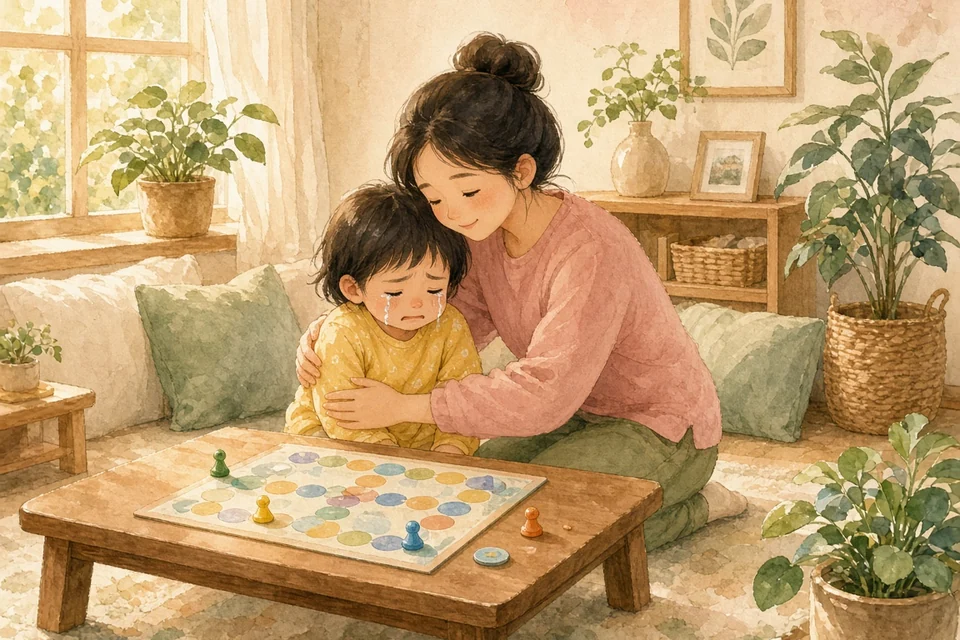
Before: When joining in or making mistakes feels scary
Ask which part feels difficult: the rules, being laughed at, or getting something wrong. Let your child watch a round, roll the dice for you, or find just one puzzle piece before deciding whether to join.
Agree that a small attempt matters more than a perfect result. Offer a choice between watching and being on your team. Smaller steps provide an entry point; they are not a demand for immediate bravery.
During: Receive the feelings after a loss
NTUH guidance on frustration starts with receiving the emotion. Get down nearby and name the disappointment: “You really wanted to win. This feels hard.” Offer a hug if wanted, or quiet company. Wait for breathing and the body to settle.
Do not shame, laugh at, or force an apology for being a sore loser. Avoid “boys do not cry.” Starting with “It does not matter” can miss how much it matters to your child. If pieces are thrown or someone is hit, calmly block harm: feeling upset is allowed; hurting people is not.
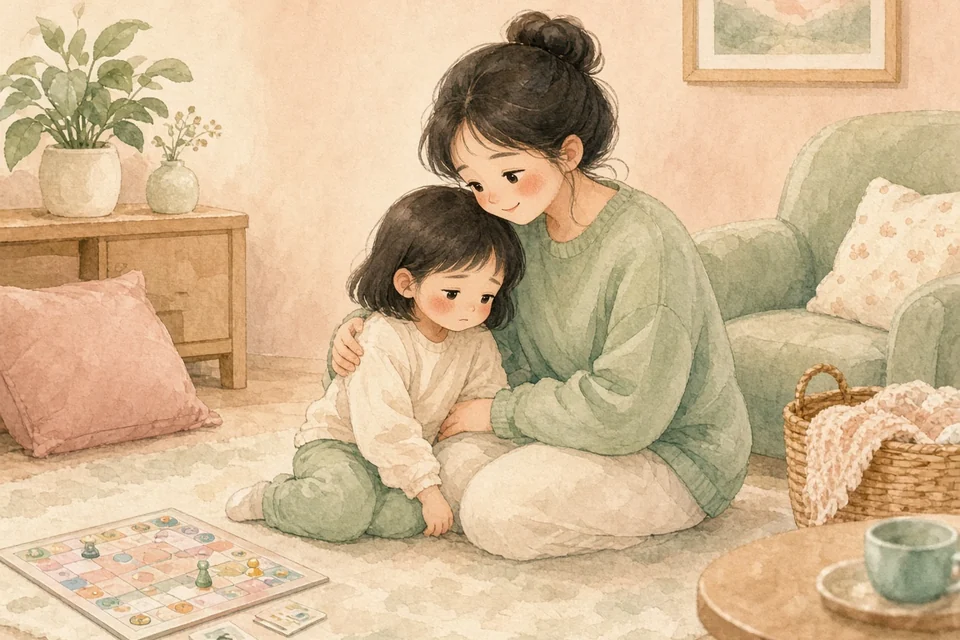
After: Talk about the game once everyone is calm
Ask what felt hard and notice a specific effort or choice. AAP sports guidance separates self-worth from performance: a score does not define a child. Recognize waiting for a turn or considering a different move, rather than praising only a win.
If someone was hurt or pieces scattered, help your child check on the person and tidy up once calm. Allow time for repair. Sometimes choose cooperative play or games without a winner, such as passing a ball or taking turns drawing.
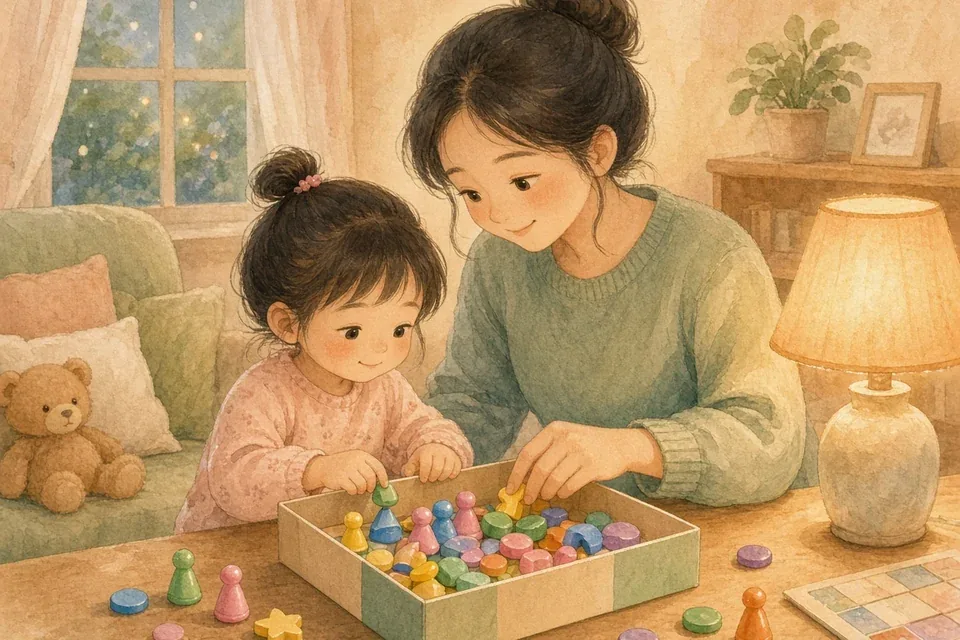
Inviting another try: Keep it small and optional
Take a break rather than forcing an immediate competitive rematch. Later, offer one puzzle piece together or the option to stop for today. Watching is also an option. When your child tries, stay nearby without taking over.
These approaches may make room for another attempt, but children move at different paces and outcomes vary. If distress is extreme and prolonged, almost all new activities are avoided, or your family is very worried, speak with a pediatrician or child mental-health professional. Do not diagnose an anxiety disorder from this behavior.
Frequently asked questions
What if my five-year-old cries after losing a game?
Pause the game, stay nearby, and name the disappointment. Wait until their body settles before talking. Avoid ridicule or an immediate rematch; calmly prevent harm if someone is being hit.
Does crying mean poor frustration tolerance?
Preschoolers are still finding their way through disappointment and self-worth. Crying is not a character flaw. Notice which situations are hardest and offer support at your child’s pace rather than drawing conclusions from one reaction.
Can I start with “It is okay” or tell them not to cry?
Try acknowledging the feeling first: “You are really disappointed.” Stay close, then offer reassurance after your child feels understood. There is no need to demand an end to tears or say that boys cannot cry.
How can I invite another try when mistakes feel scary?
Let your child watch, make the task smaller, and agree that trying matters more than perfection. Once calm, recognize effort and choices, then offer a smaller attempt. Resting today is allowed; there is no guaranteed timetable.
When should we seek professional support?
If distress is extreme and prolonged, your child avoids almost all new activities, or your family is very worried, consult a pediatrician or child mental-health professional to discuss support.
References
Related reading: Supporting siblings through a fight · Talking about lying
Based on NTUH, Hong Kong Family Health Service and AAP guidance. These are general parenting ideas; discuss individual emotional or developmental needs with a professional.
Disclaimer: This is general parenting information, not medical or psychological advice. Seek professional support for persistent distress or concerns.
Company before another game
Leave some time together without keeping score, and follow your child’s pace.
Find a little company with Kid Coax