When Kids Resist Nasal Rinses and Snot Suction: Gentle Ways to Help a Stuffy Nose at Night
Resistance to nasal care is common; in our family, letting our child work the pedal sometimes helps them feel more in control. This is a parent’s diary of our family’s experience, not a guarantee of results. It is not sponsored. Nasal rinse devices and aspirators are medical devices: follow the product instructions and consult a doctor.

That first night: Our family’s experience
Our family uses saline plus a foot-pump aspirator. We use PHYSIOMER nasal spray. The spray feels uncomfortable to our child at first, but after we promptly suction it out, our child says the stuffiness is gone and feels more comfortable. Later, when a stuffy nose returns, our child asks for the spray. This describes our family’s experience only.

Later: Reading the saline instructions
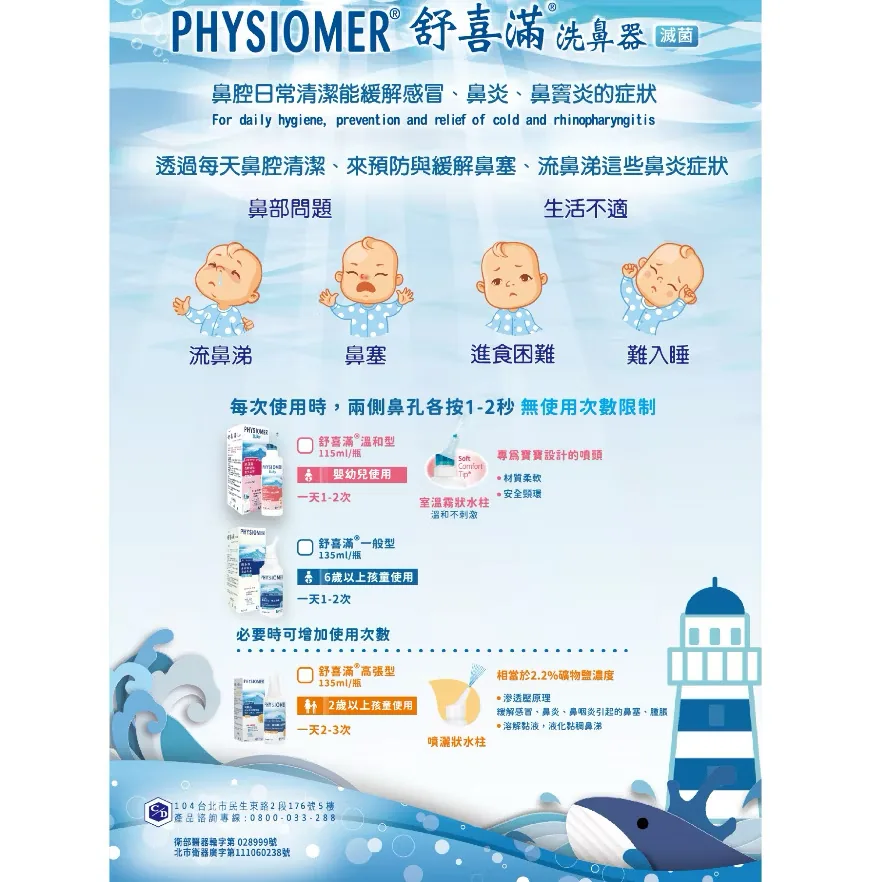
When looking at a baby nasal rinse device, we refer to the supplied package and instructions below. These are product-specific instructions, not AAP dosing guidance.
- Gentle 115ml: for babies at least 15 days old; 1–2 times a day.
- Regular 135ml: for ages 6 years and up.
- Hypertonic 135ml (about 2.2%): for ages 2 years and up; 2–3 times a day.
- Press for 1–2 seconds in each nostril per use.
Check the actual package and instructions, and ask a doctor which version suits your child.
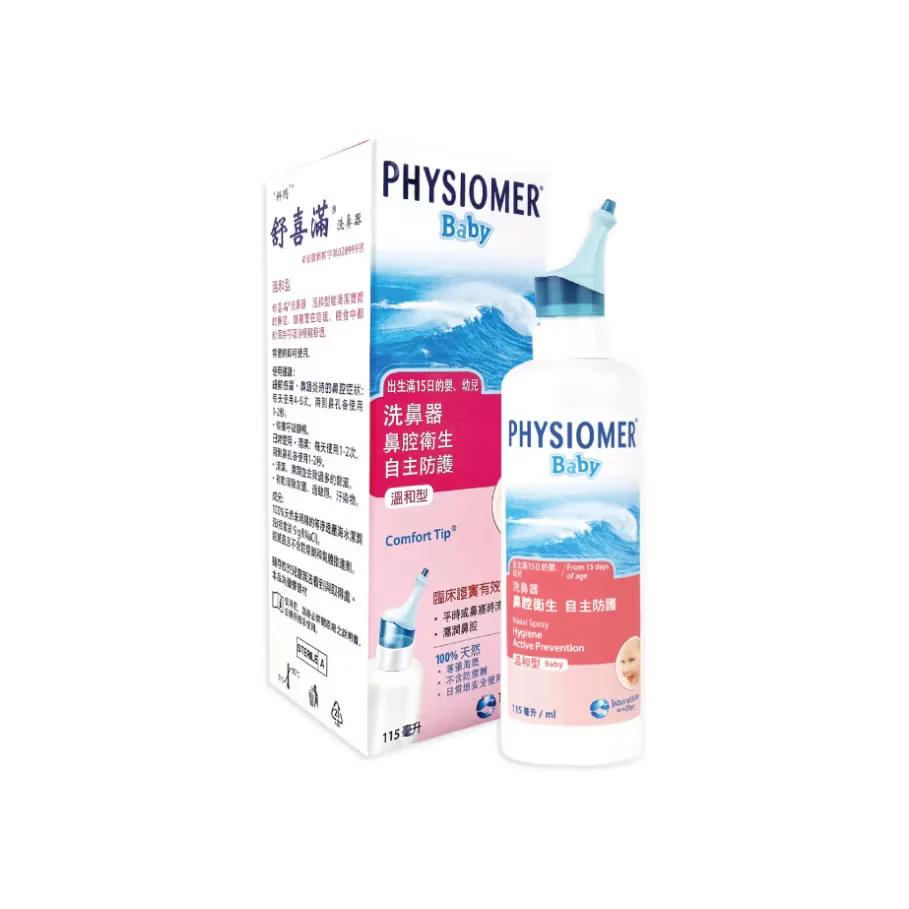
This is a product photo of the Gentle 115 ml box and bottle our family uses.

Now: A little more control
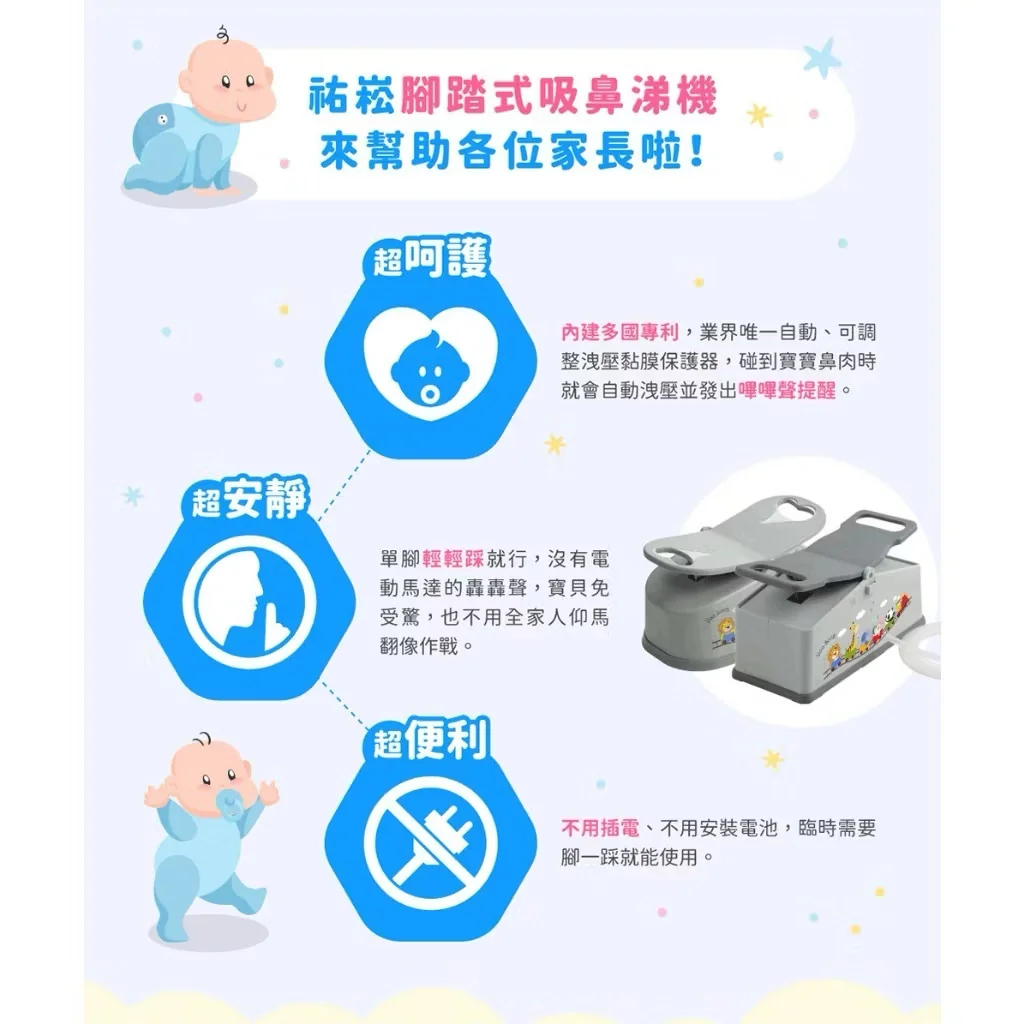
Our pediatrician suggested the You Song foot-pump aspirator. With a foot controlling suction, we can hold and comfort our child with both hands. It has worked very well for our family; now our child no longer resists suction. Sometimes we let our child work the pedal and handle suction to increase their sense of control. This is our experience, not a recommendation for every child.
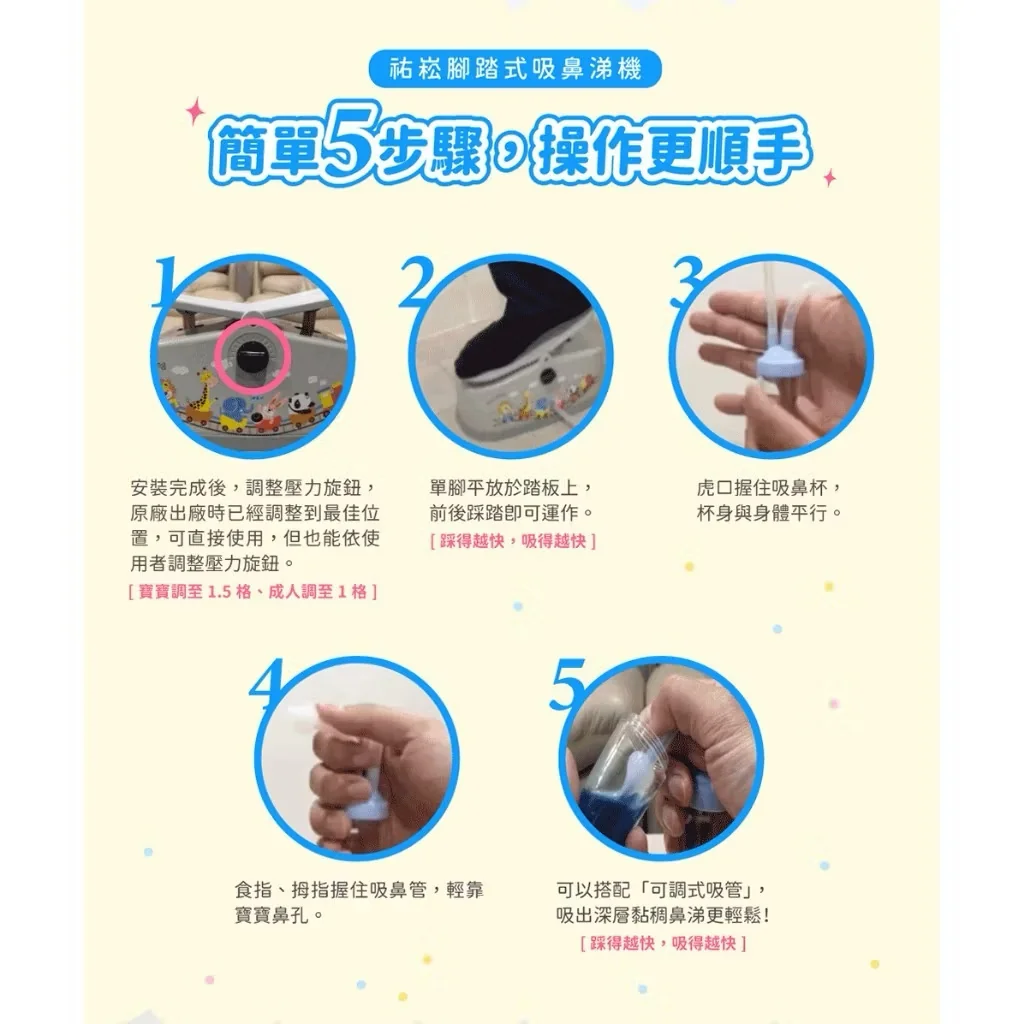
The supplied instructions describe these five steps:
- Set the pressure knob: baby, 1.5 marks; adult, 1 mark.
- Place one foot on the pedal and pump back and forth; faster pumping means faster suction.
- Hold the suction cup in the web between your thumb and index finger, keeping the cup parallel to your body.
- Hold the nasal tube with your index finger and thumb, resting it gently at the baby’s nostril.
- The adjustable suction tube can be used for deeper, thick mucus.
The instructions describe mucosal-protection pressure release, beeps when the tip touches nasal tissue, and no electricity needed. Follow the actual instructions and consult a doctor about use for your child.

A note beside our diary
AAP’s general home-care guidance describes saline spray or drops to loosen dried or sticky mucus, followed by blowing the nose or using a bulb syringe. This does not endorse the products in our diary. See reference 3 below.
When our diary gives way to medical care
The Taiwan Pediatric Infectious Disease Society notes that fever, cough, and a runny nose are not always a simple cold; a pediatrician must assess them. Colds can have complications such as middle ear infections or sinusitis. Ear pain is a reason to seek medical assessment (reference 1).
Seek prompt care for a baby under 3 months with a cold and fever. NTUH also recommends a full assessment for fever in this age group. Pauses in breathing, rapid breathing when there is no fever, breathing difficulty, or the chest wall pulling inward on inhalation need prompt medical care (references 1 and 2).
AAP explains that yellow or green mucus during a cold does not necessarily mean a bacterial infection. Cold symptoms or yellow or green mucus lasting more than 10 days without improving need assessment. Thick yellow mucus with fever lasting 3 or 4 days is another possible sign of sinusitis; seek assessment for persistent fever as well (reference 4). Do not wait for the 10-day mark if your child has breathing warning signs or ear pain.
Frequently asked questions
What if my 3-year-old strongly resists a nasal rinse?
In our family, we sometimes let our child work the pedal and handle suction to feel more in control. This is our experience, not a promise of results. Follow the product instructions and consult a doctor.
Which PHYSIOMER version is suitable for my child?
The supplied instructions list gentle 115ml for babies at least 15 days old, regular 135ml for ages 6 years and up, and hypertonic 135ml for ages 2 years and up. Check the actual package and ask a doctor which version suits your child.
How does our family use the foot-pump aspirator?
Our pediatrician suggested the You Song foot-pump aspirator. We can hold and comfort our child with both hands while controlling suction with a foot. It has worked very well for our family, and our child no longer resists suction.
Does yellow or green mucus mean a bacterial infection?
No. AAP explains that mucus can turn yellow or green during a cold; this does not necessarily mean a bacterial infection. Cold symptoms or yellow or green mucus lasting more than 10 days without improving need medical assessment.
When should we seek medical care?
Seek prompt care for fever in a baby under 3 months, pauses in breathing, rapid breathing when there is no fever, breathing difficulty, or the chest wall pulling inward on inhalation. Persistent fever or ear pain also needs medical assessment.
References
Related reading: Flu or Common Cold in Toddlers? Home Care and Warning Signs to See a Doctor · Afraid of medicine or shots? 4 ways to support courage
This parent experience diary uses the supplied product instructions and the four official sources below. For individual care, consult a doctor.
Disclaimer: This is a parent’s experience and general health information, not medical advice or a guarantee of results. It is not sponsored. Follow the product instructions and consult a doctor.
A moment of play before nasal care
Before nasal care, try a pretend nose scan or a pretend call with Kid Coax to shift your child’s attention. This is a playful distraction, with no promise of medical benefit.
Open Kid Coax