Is Santa Real? Age-by-Age Answers and a Family Gift Agreement
How should you answer “Is Santa real?” at different ages? Follow your child’s questions: enjoy the story with younger children, listen when doubts start, and be honest when they want the truth. A birthday does not have to be the deadline for a big reveal. Use this age-by-age guide as a starting point, then make a gift agreement that works for your family.
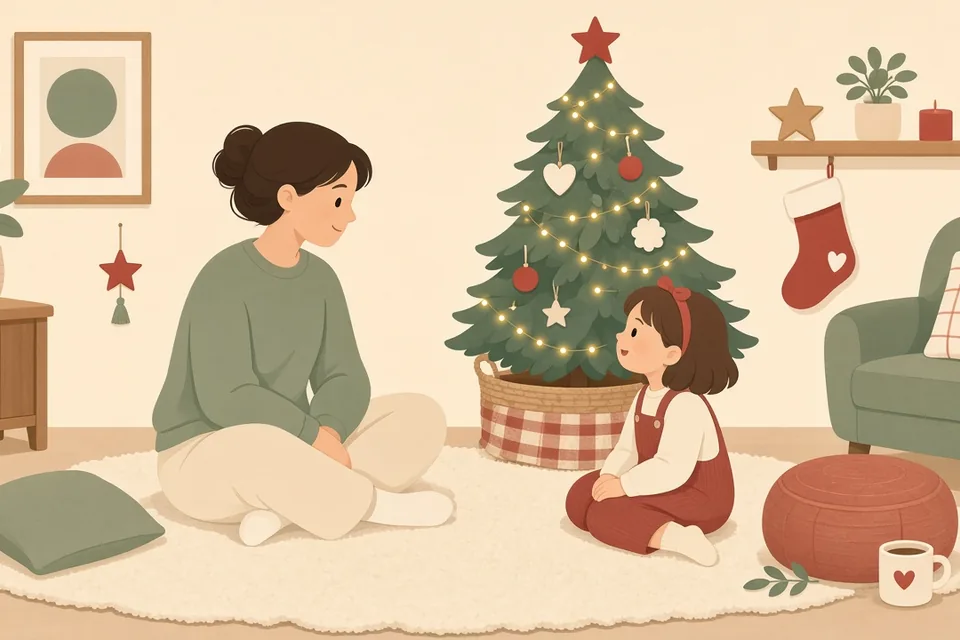
Age-by-age guide: follow the question, then the age
The same question can be an invitation to play or a serious request for facts. Pause and hear the whole question. Questioning earlier or later than a classmate does not make a child too grown-up or too naive.
A Boston Children’s Hospital psychologist recommends asking open-ended questions and answering honestly when a child wants the truth. Emotional readiness matters more than a fixed age (reference 1). Adapt the sample wording below to your own voice.
Younger preschoolers: stories and pretend play
For a child enjoying make-believe, try: “Santa is a holiday story people enjoy. We can play a game of sharing surprises.” Hanging a star, reading a story, or setting out cookies can feel magical without promising that every detail happens in real life.
Let Christmas dress-up be a choice: a comfortable outfit or a favorite hat may be enough. A child can skip the costume or watch from a distance instead of posing with someone dressed as Santa.
Avoid threatening a place on the naughty list or making gifts the only reason to be kind. For cleanup, say, “Let’s put the toys in the box so nobody steps on them.” Keep the boundary connected to what needs to happen.
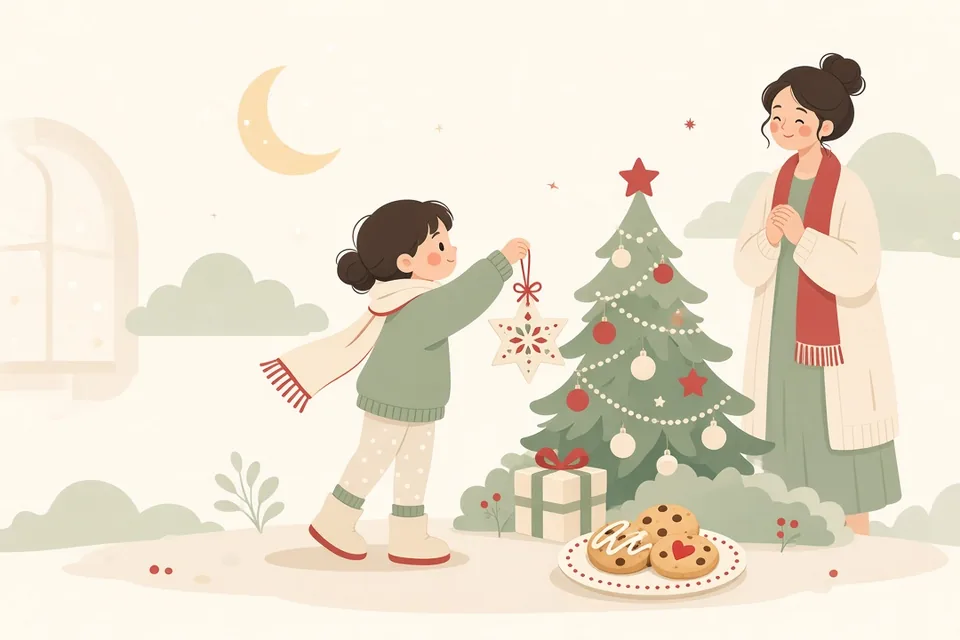
When questions start: listen first
Questions often come up in the early school years, sometimes after a conversation with a classmate. Some children ask sooner. Try: “What do you think?” and “What made you wonder today?” Listen without rushing to correct them or repeatedly turning the question back on them.
If they want to explore how the story works, talk about the story. If they ask whether there is an actual person doing all of it, move toward a direct answer. Avoid staged footprints, manufactured evidence, or increasingly elaborate explanations.
You might ask, “Do you want to keep playing the story, or would you like the real-life answer?” Once they choose the real answer, give it. Listening should help you understand your child, not delay an answer they have asked for.
When they want the truth: be kind and honest
Many children develop serious doubts during the school years, but there is no required birthday. When your child clearly wants the truth, try: “There isn’t a real person who flies to every home in one night. The gifts come from family. We use the Santa story to celebrate caring and giving.”
Make room for sadness or anger: “You believed it was real, and finding out feels upsetting. I’m here to listen.” If your child feels misled, acknowledge that your earlier explanations were confusing. Explain that you meant to share a holiday story, answer follow-up questions, and let them have their feelings.
You can offer a new role: “Would you like to help prepare a little surprise for your younger sibling?” They can decline. Protecting someone else’s fun does not require inventing stories. With classmates, “Families have different holiday stories; you can ask at home” is enough. Avoid teasing believers or judging families that do not celebrate.
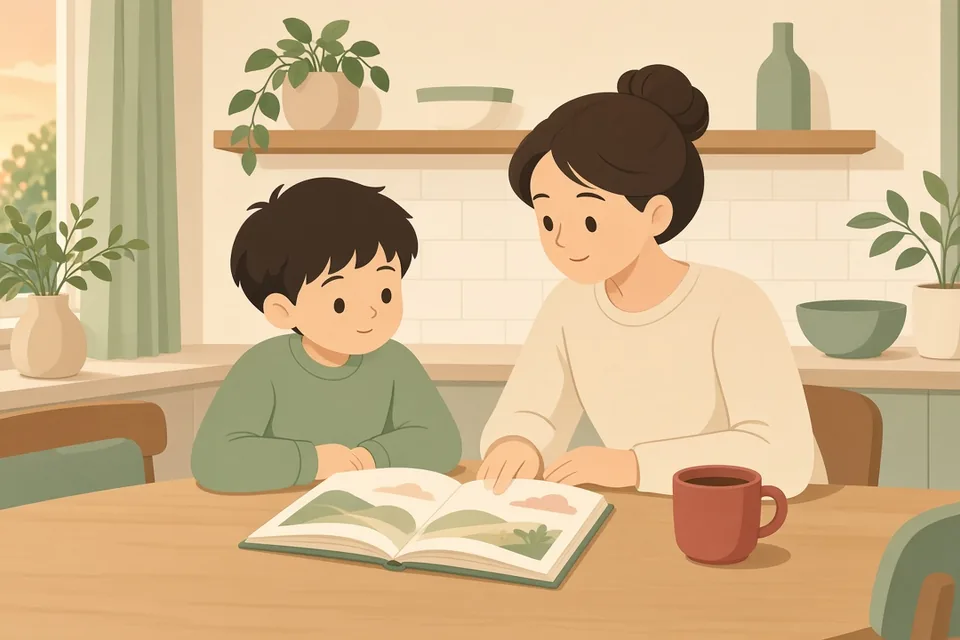
A family gift agreement: receiving and giving
Adults can decide on an affordable budget before talking with children. Explain: “You can wish for lots of things. We’ll choose what fits this year; a wish list isn’t a promise.” The AAP encourages families to set a budget rather than feel pressured to buy many gifts (reference 2).
One option is a modest Santa gift, with other gifts labeled as coming from the relatives who chose them. Children can thank an aunt, grandparent, or caregiver directly. This is a family choice, not a rule everyone needs to adopt.
The price or number of Christmas gifts does not measure good behavior or how much a child is loved. If a classmate receives an expensive toy, try: “Families have different budgets and traditions. We’re following our plan.” Families with smaller budgets, no gifts, or no Santa tradition deserve equal respect.
Alongside “What do I want?” ask, “Who could I do something for?” Montreal Children’s Hospital connects realistic expectations with learning to give (reference 3). A child might draw a card, help wrap a relative’s gift, or read with a grandparent. CHOC notes that gifts can include help and time, rather than purchased things (reference 4).
Draw or write your agreement together: who you want to give to, who will prepare each gift, and how to say thank you. Adults remain responsible for spending; children can help choose and give without carrying the family’s financial worries.
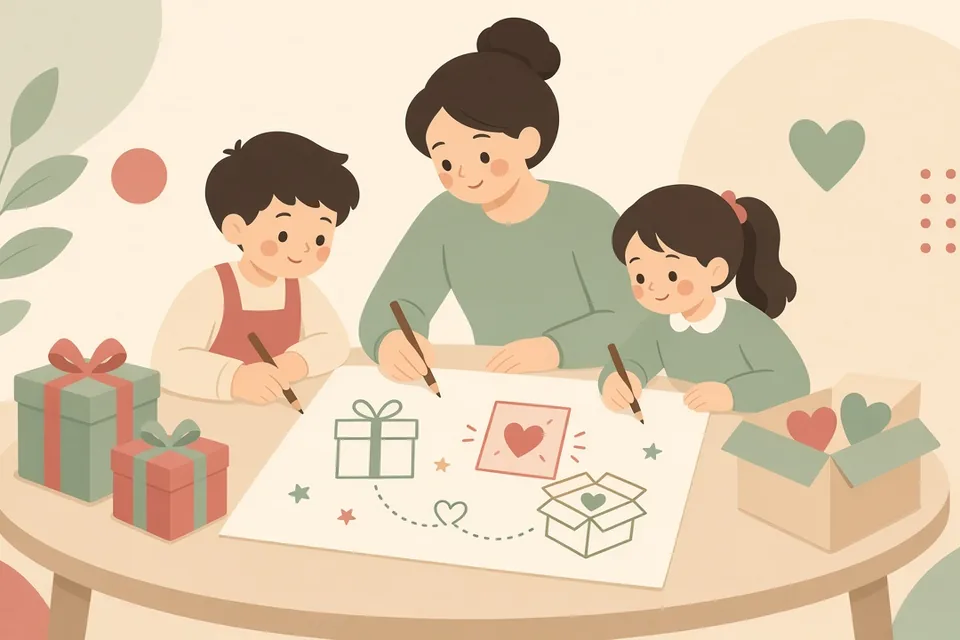
Classroom gift exchanges: when a gift is not a favorite
Before a preschool or classroom gift exchange, check the class budget and wrapping rules. Explain that your child may not receive a favorite thing: the point is giving and receiving kindly.
Practice a short “thank you for choosing a gift for me.” Your child can tell a parent later that they did not love the gift, while avoiding words that hurt the giver in the moment. Acknowledge disappointment without shame or forcing exaggerated enthusiasm. A calm thank-you is enough.
Frequently asked questions
How should I answer “Is Santa real?”
Ask what your child thinks and why they want to know. If they are enjoying pretend play, share the story. If they clearly want a real-life answer, kindly explain that family members prepare the gifts, without manufacturing evidence to keep them believing.
At what age should I tell my child the truth about Santa?
There is no age that fits every family. Pay attention to whether your child is seriously asking for facts and how much they understand. When they clearly want the truth, answer honestly instead of avoiding the question because they seem young.
Should every gift be labeled as coming from Santa?
No. You could choose one modest Santa gift and label other gifts with family members’ names so your child can thank the people who gave them. Having no Santa gift is fine, too. Price and quantity do not measure a child’s worth.
What if classmates still believe after my child knows the truth?
Explain that families have different traditions. There is no need to expose or tease classmates. Your child can say, “Families have different holiday stories; you can ask at home.” Helping younger siblings enjoy a surprise is optional, and does not require making up stories.
Should I use the naughty list to encourage good behavior?
Avoid threatening to take gifts away. Keep the Santa story playful. When a boundary is needed, explain the behavior, the reason, and the next step so your child practices caring for others and meeting everyday needs, rather than acting only to earn presents.
References
Further reading: Talking about honesty without shame · Helping children feel comfortable around relatives
This guide draws on parenting resources from the children’s hospitals and pediatric organization above. The sample phrases are general suggestions; adjust them to your child’s response.
Family note: Families choose their own traditions, including not celebrating Christmas. There is no single correct way to celebrate, and these suggestions do not guarantee a particular response.
Make room for a conversation
When your child brings a question, take a moment to sit together and listen before you answer.
Explore more family ideas